An example of an Algorithm Intelligence Scalping Strategy
This article gives an example of an AI Scalping Strategy. This is an example only — always do your own research.
We recommend reading the Algorithm Intelligence documentation first. When creating an AI, it is generally more profitable to use it for a specific purpose — for example, scalping or swing trading, but not both simultaneously.
Signal Strategies
For this example, we use a scalping algorithm and review three scalping strategies. You can download each by clicking its name.
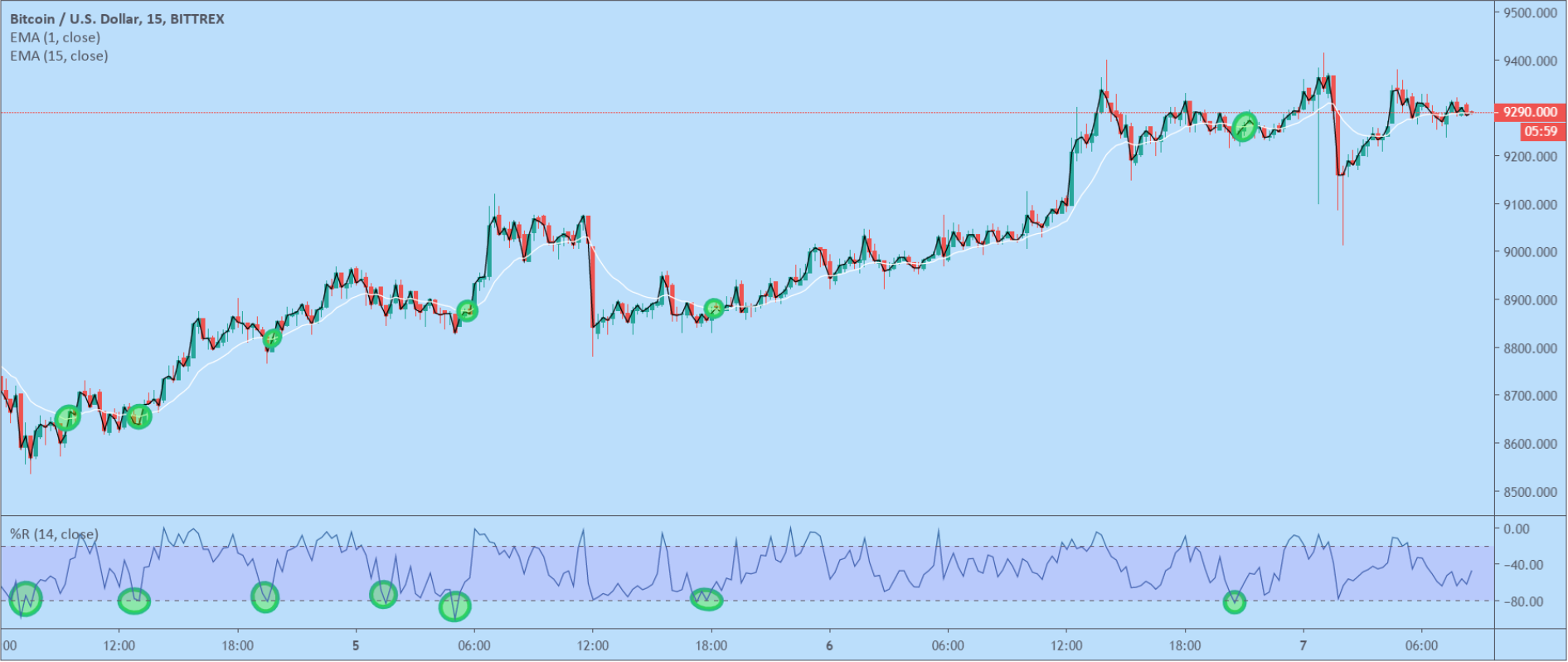
Uses the MESA on the 4h chart to identify the broader trend, Williams %R to identify oversold conditions, and a crossover of the 1 and 15 EMA to confirm momentum. Williams %R signal is kept for 5 candles since it and the EMA crossover rarely signal simultaneously.
Exit settings: Take Profit 7% · Stop-Loss 1% · Trailing Stop-Loss 1% · Arm at 1.5%
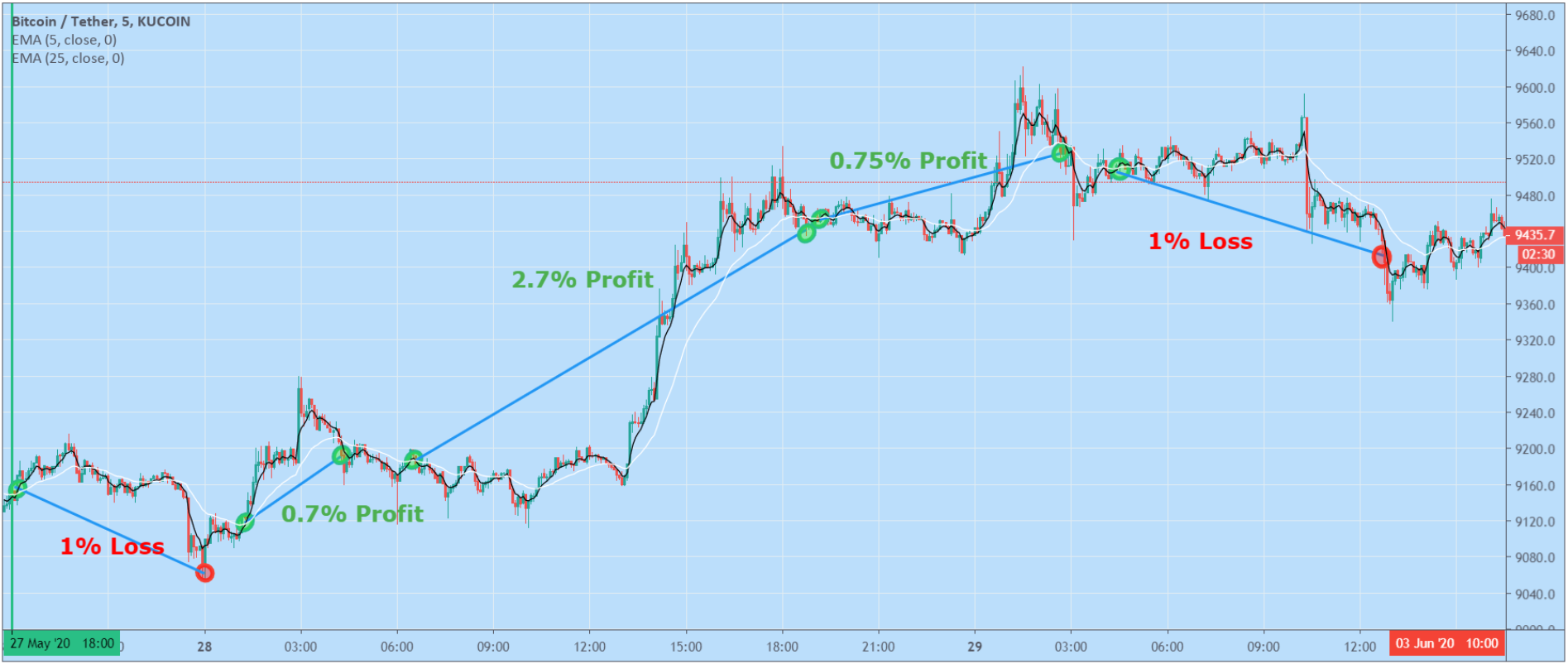
Uses the MESA on both the daily and 4h charts to confirm trend direction, then a crossover of the 5 and 25 EMA on the 5-minute chart for entries.
Exit settings: Take Profit 7% · Stop-Loss 1% · Trailing Stop-Loss 1% · Arm at 1.5%
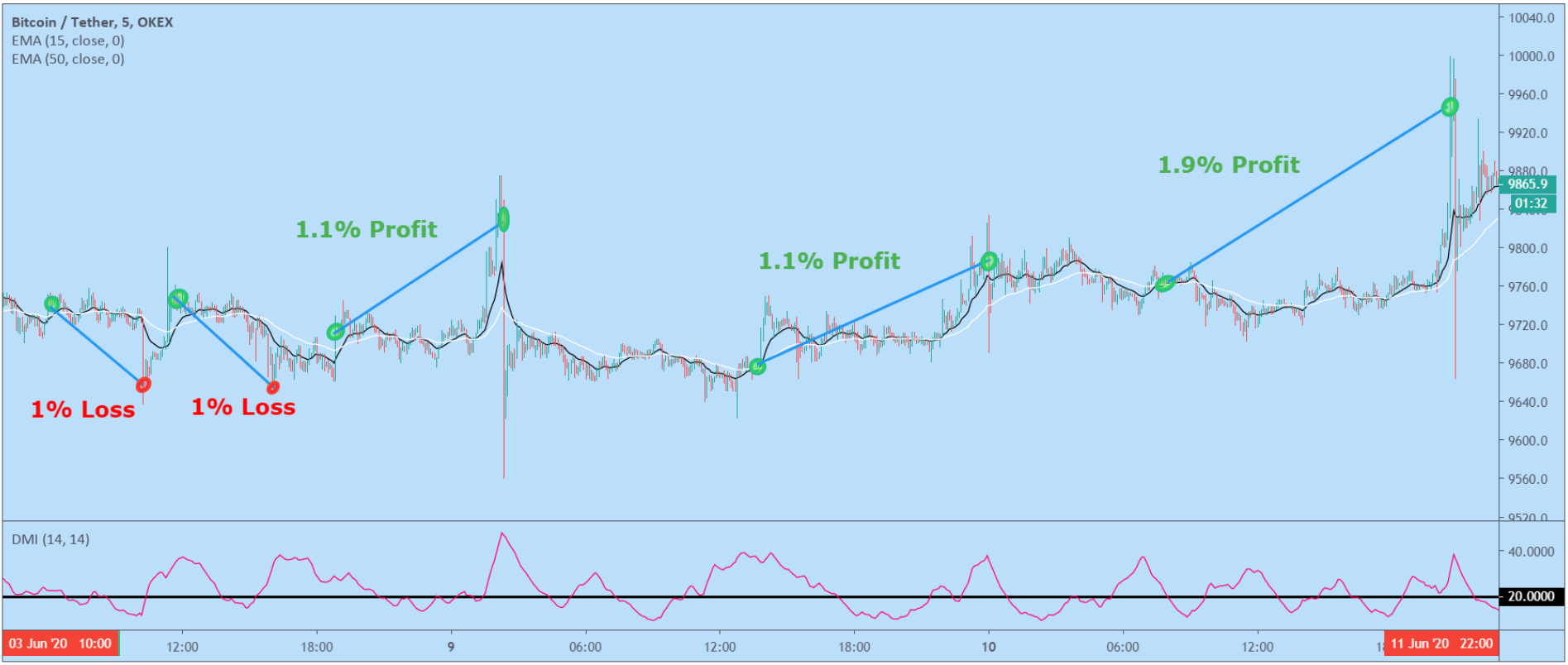
Uses the MESA on the 4h chart for trend direction, and a crossover of the 15 and 50 EMA combined with ADX greater than 20 on the 5-minute chart for entries.
Exit settings: Take Profit 5% · Stop-Loss 1% · Trailing Stop-Loss 0.5% · Arm at 1.5%
Trend Strategy
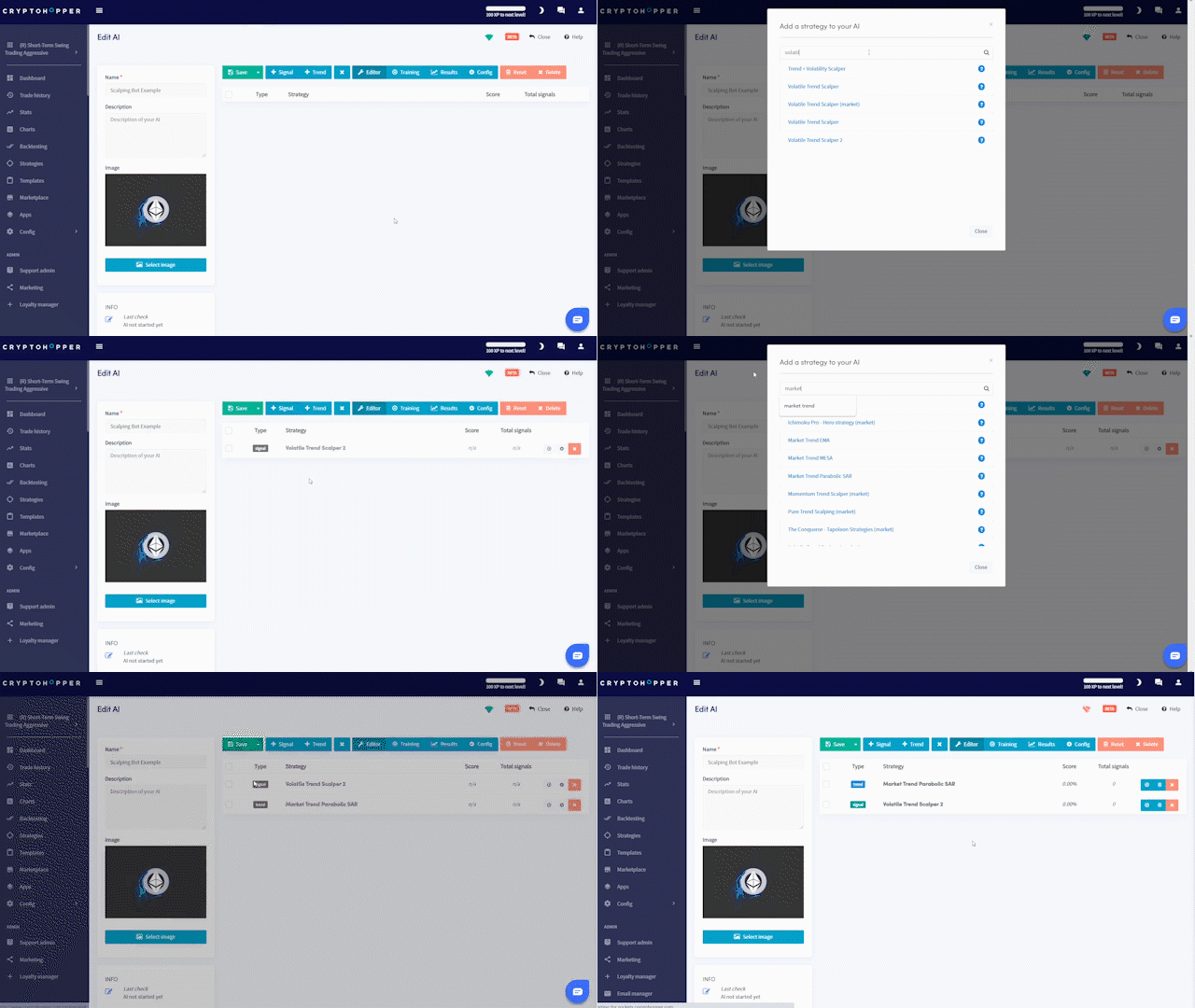
A simple Parabolic SAR strategy on the daily timeframe that continuously signals buys in uptrends and sells in downtrends without generating neutral signals. Adding the Parabolic SAR on multiple timeframes with "necessary signal" active would introduce neutral signals — so we keep it on a single daily timeframe.
Strategy Config
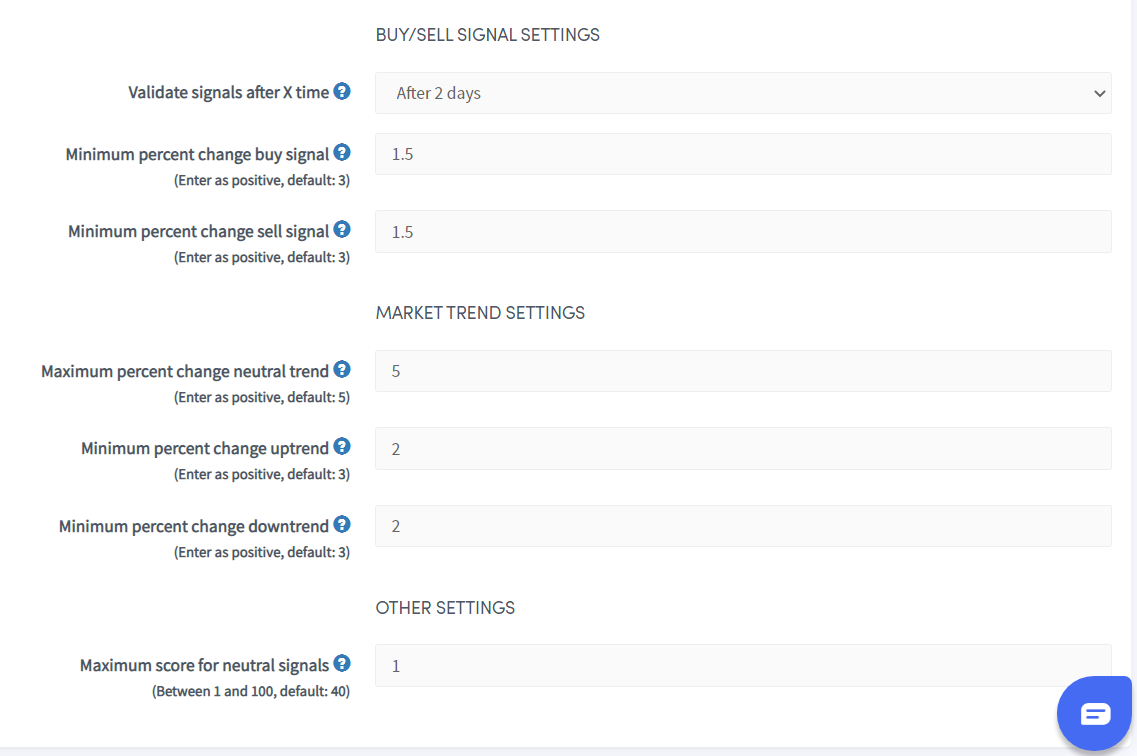
Validate signals after X time: 2 days — scalping is short-term, but low volatility can make 1 day too short to reach the profit target.
Minimum percent change buy signal: 1.5% — the minimum threshold for a positive trade, matching our Trailing Stop-Loss arm level.
Minimum percent change sell signal: 1.5% — not critical here as we sell using sell settings rather than sell indicators.
Maximum percent change neutral trend: 5% (default) — not important as our Trend Strategy generates no neutral signals.
Minimum percent change uptrend: 2% — the trend should experience a more significant move than the signal strategy itself.
Minimum percent change downtrend: 2% — same reasoning as above.
Maximum score for neutral signals: 1 — not important as we don't use neutral signals.
Training
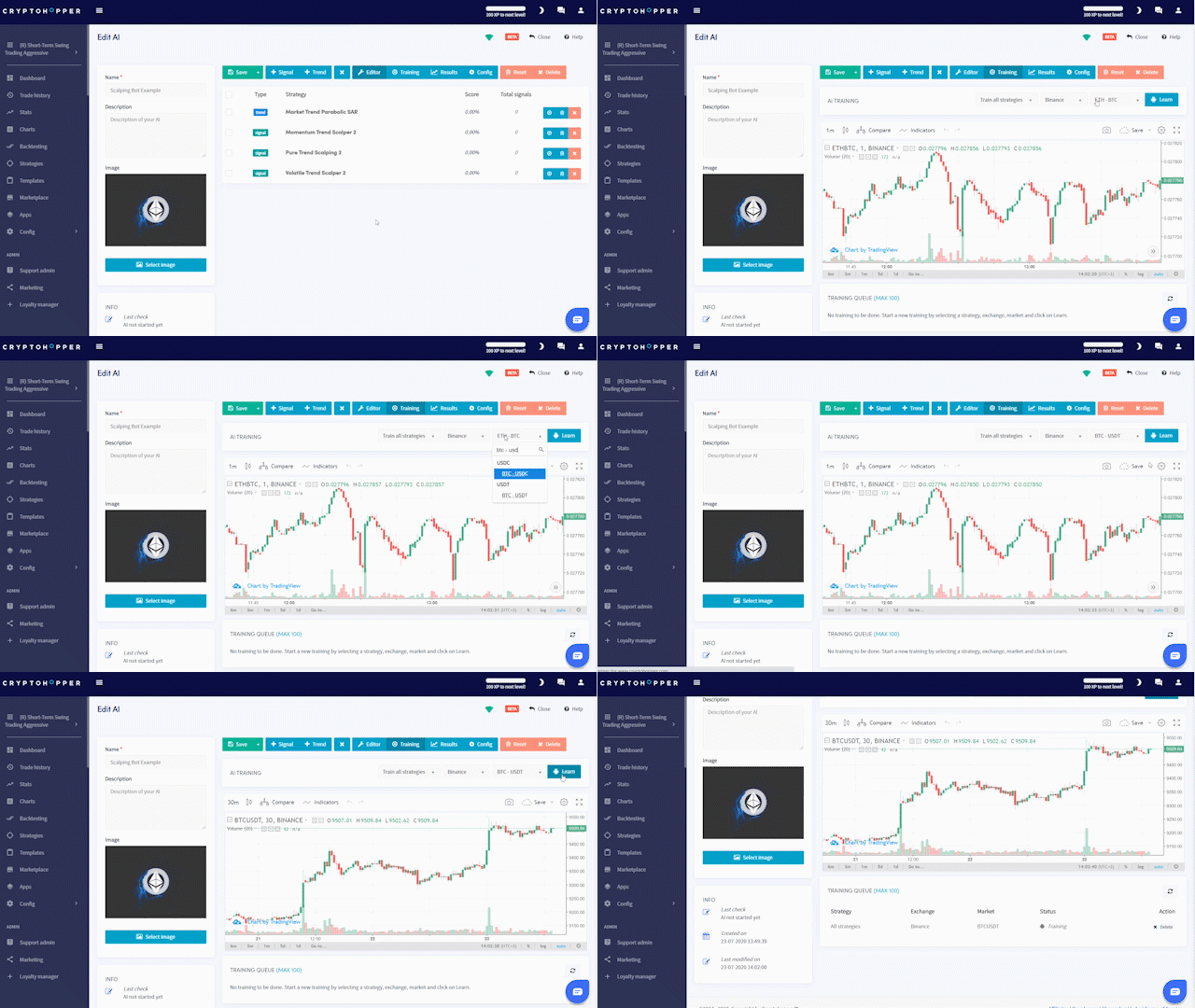
We train on BTC/USDT only, since that is the pair our strategies were built around. Scalping strategies generate enough signals to give an accurate picture of performance.
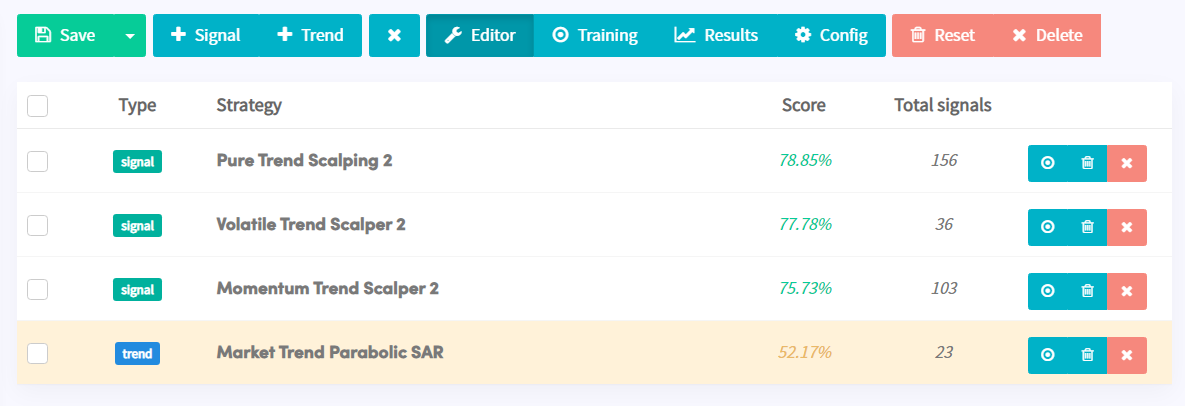
Results show the scalping strategy performing well — more than 75% of trades reached the 1.5% target.
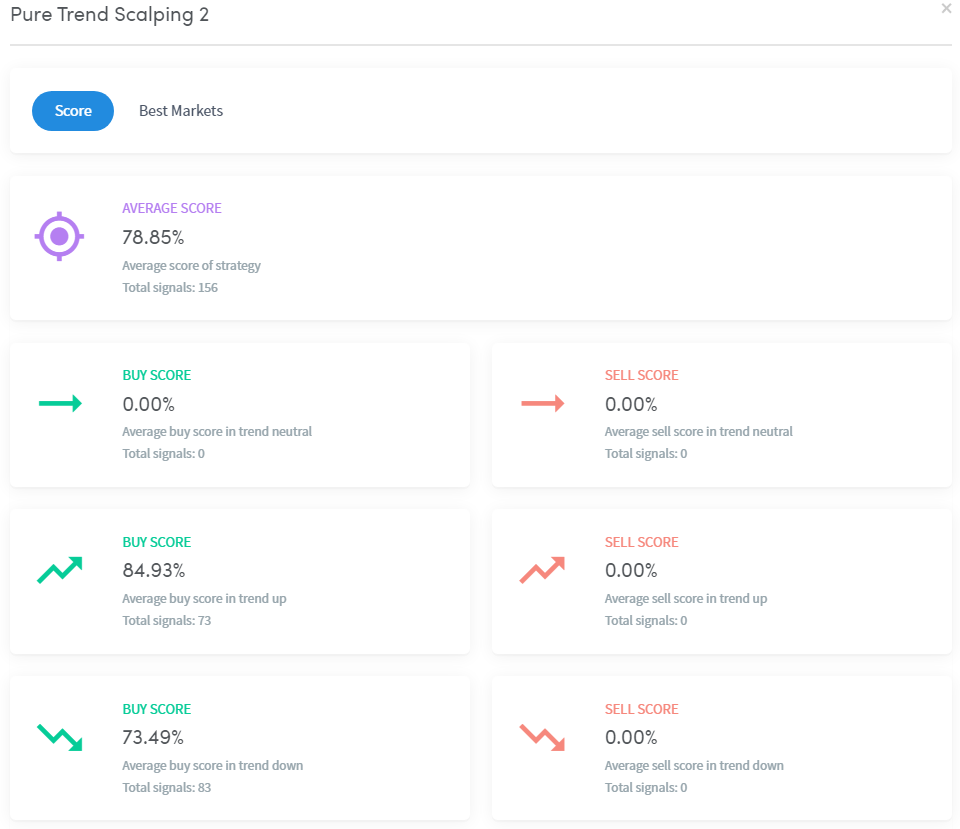
Nearly 200 signals were generated in total. Clicking on individual strategies shows that win rates are higher in uptrend markets than in downtrend markets — which is expected given that the MESA acts as a trend filter.

In the Results section, uptrend scores are approximately 20% higher than downtrend scores.
Baseconfig
Buy settings
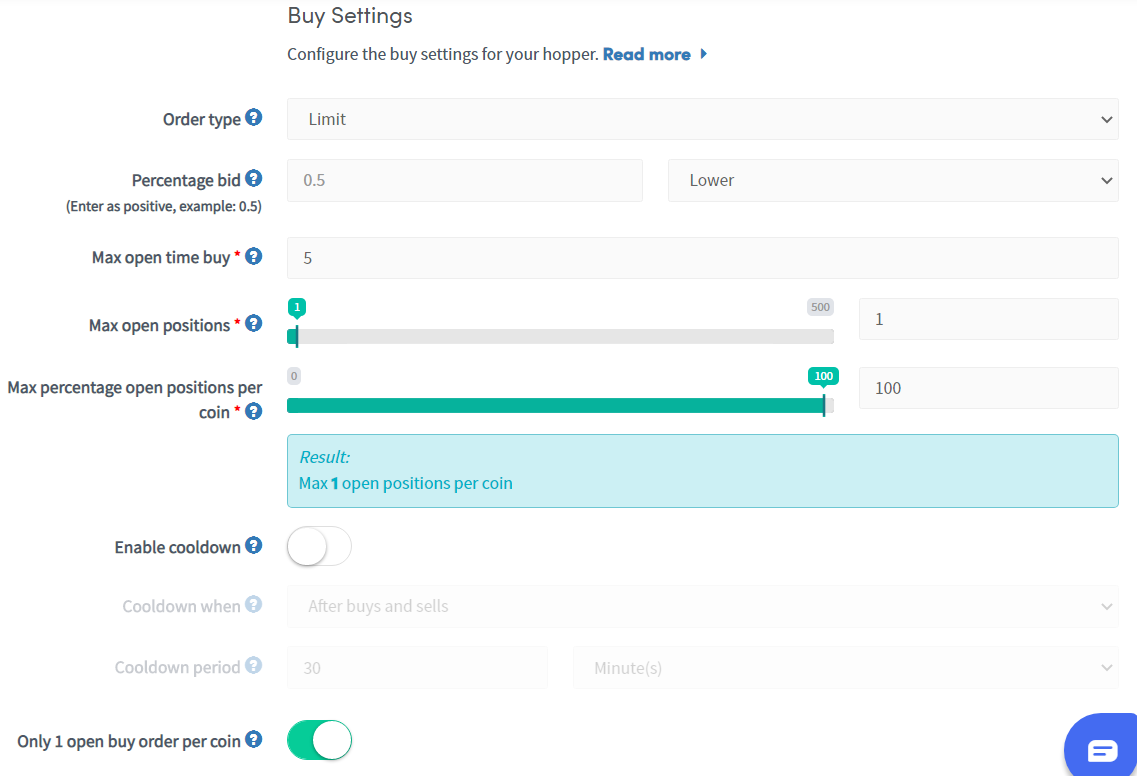
Order type: Limit orders — in scalping, even a 0.01% difference per trade is significant.
Max open buy time: 5 minutes — we don't want to enter a trade an hour after the opportunity was found.
Max open positions: 1 — we only trade one currency against BTC without DCA. "Max percentage open positions per coin" and "Only open 1 position per currency" are configured accordingly.
Coins and amounts
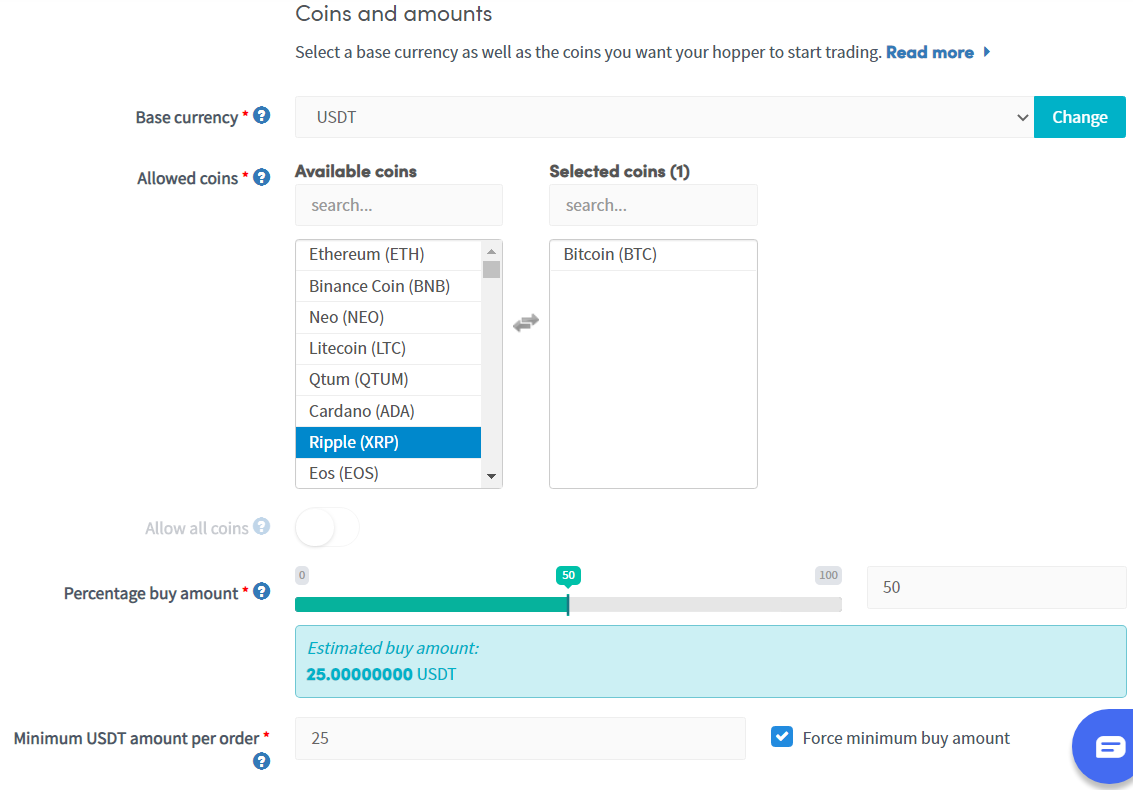
Quote currency: USDT — our AI was trained against USDT.
Percentage buy amount: 50% — since we only hold 1 position at a time. If you are new to trading, start with a smaller percentage. If trading with all funds, use 98% rather than 100% to leave room for fees.
Minimum USDT amount per order: Set above your exchange's minimum required amount.
Sell settings
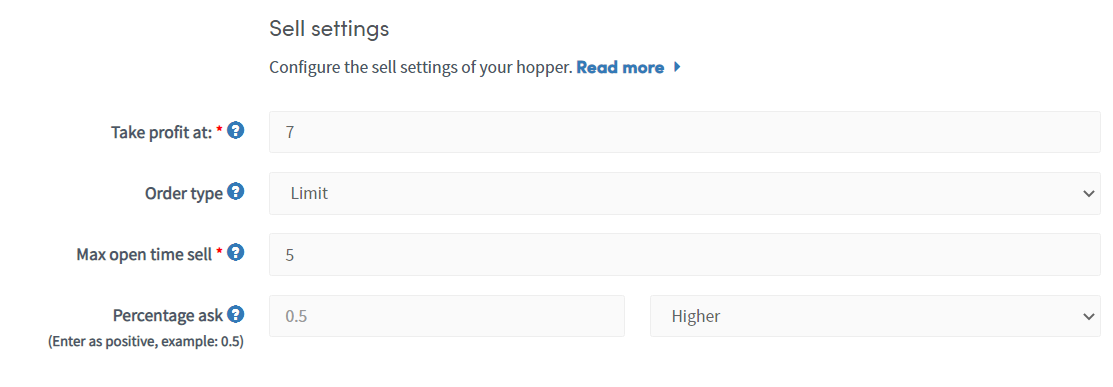
Take profit: 7% — consistent with the exit settings used in our strategies.
Order type: Limit orders — same reasoning as buy orders.
Max open time sell: 5 minutes — if the order can't fill in 5 minutes, it is canceled and retried at a new rate.
Stop-Loss
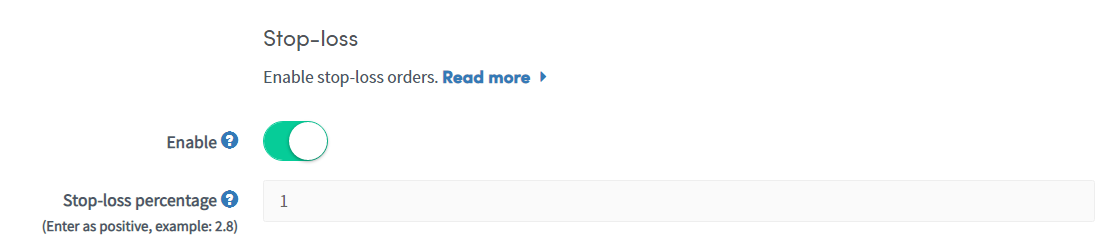
Stop-Loss: 1% — matches the Stop-Loss used in the strategies.
Trailing Stop-Loss
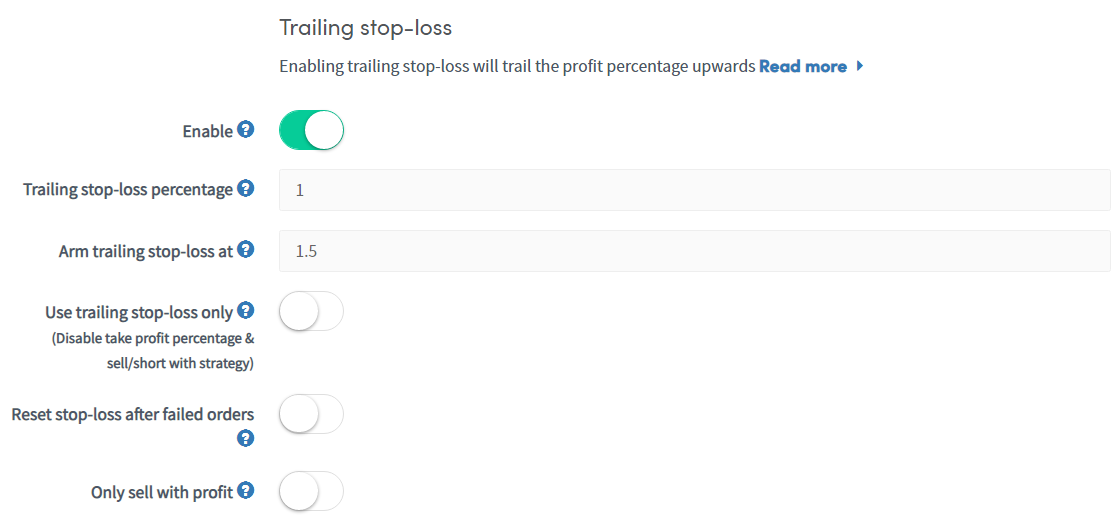
Trailing Stop-Loss percentage: 1% — gives room to grow while locking in profits once armed.
Arm Trailing Stop-Loss: 1.5% — matches the training threshold. Make sure your exchange has low enough fees to make this viable.
Strategy settings
Strategy: Select the AI you created and trained.
Signals only: Disabled — we want the AI to control buying decisions.
Number of targets to buy: 1 — we only hold one position at a time.
Use corrected score for buys/sells: Yes — takes real-time data into account and allows the AI to improve over time.
Minimum score for buys/sells: Around 80% — being selective with signals improves overall profitability.