Ein Beispiel für eine Algorithmus-Intelligenz Scalping-Strategie
Dieser Artikel gibt ein Beispiel für eine KI-Scalping-Strategie. Dies ist nur ein Beispiel — führe immer deine eigene Recherche durch.
Wir empfehlen, zuerst die Algorithmus-Intelligenz-Dokumentation zu lesen. Beim Erstellen einer KI ist es im Allgemeinen profitabler, sie für einen bestimmten Zweck zu verwenden — zum Beispiel Scalping oder Swing-Trading, aber nicht beides gleichzeitig.
Signalstrategien
Für dieses Beispiel verwenden wir einen Scalping-Algorithmus und überprüfen drei Scalping-Strategien. Du kannst jede herunterladen, indem du auf ihren Namen klickst.
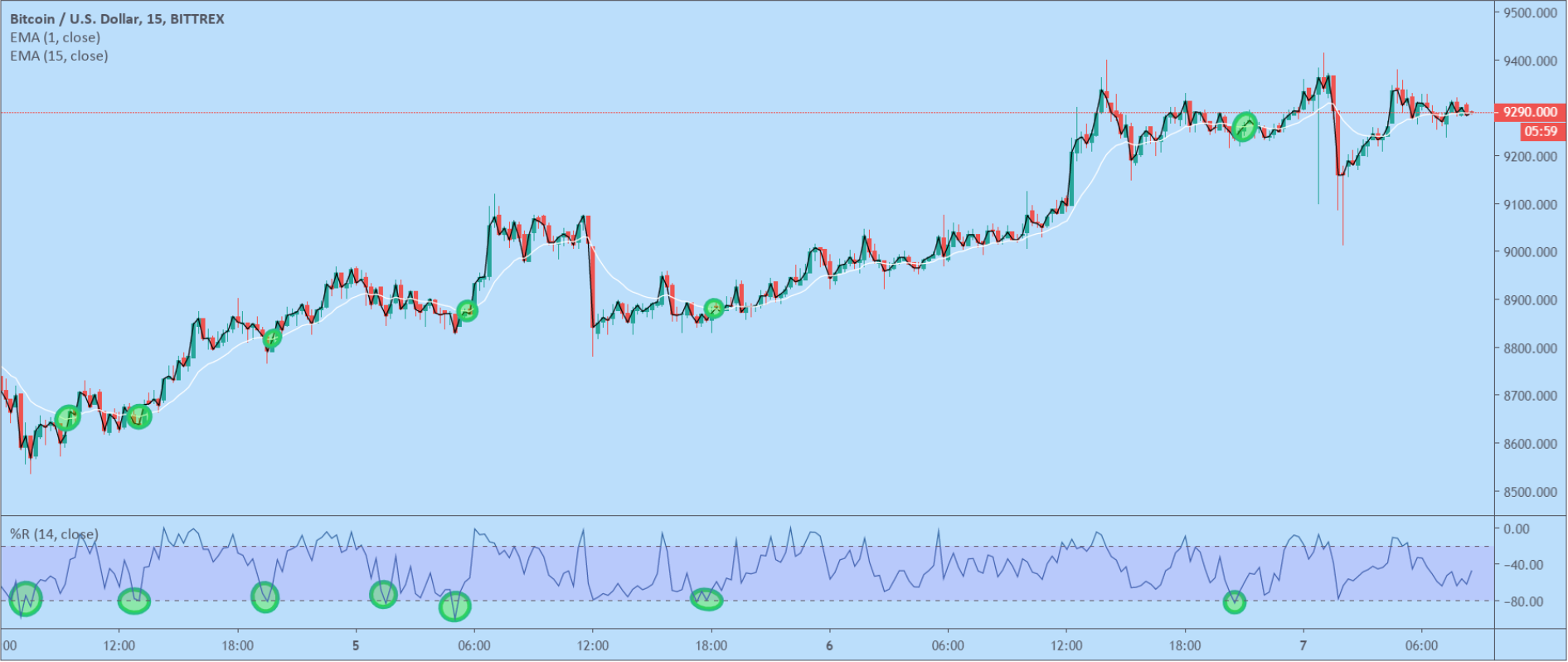
Verwendet den MESA auf dem 4h-Chart, um den breiteren Trend zu identifizieren, Williams %R, um überverkaufte Bedingungen zu identifizieren, und eine Überkreuzung der 1- und 15-EMA, um Momentum zu bestätigen. Das Williams %R-Signal wird für 5 Candles beibehalten, da es und die EMA-Überkreuzung selten gleichzeitig signalisieren.
Exit-Einstellungen: Take Profit 7% · Stop-Loss 1% · Trailing Stop-Loss 1% · Arm bei 1,5%
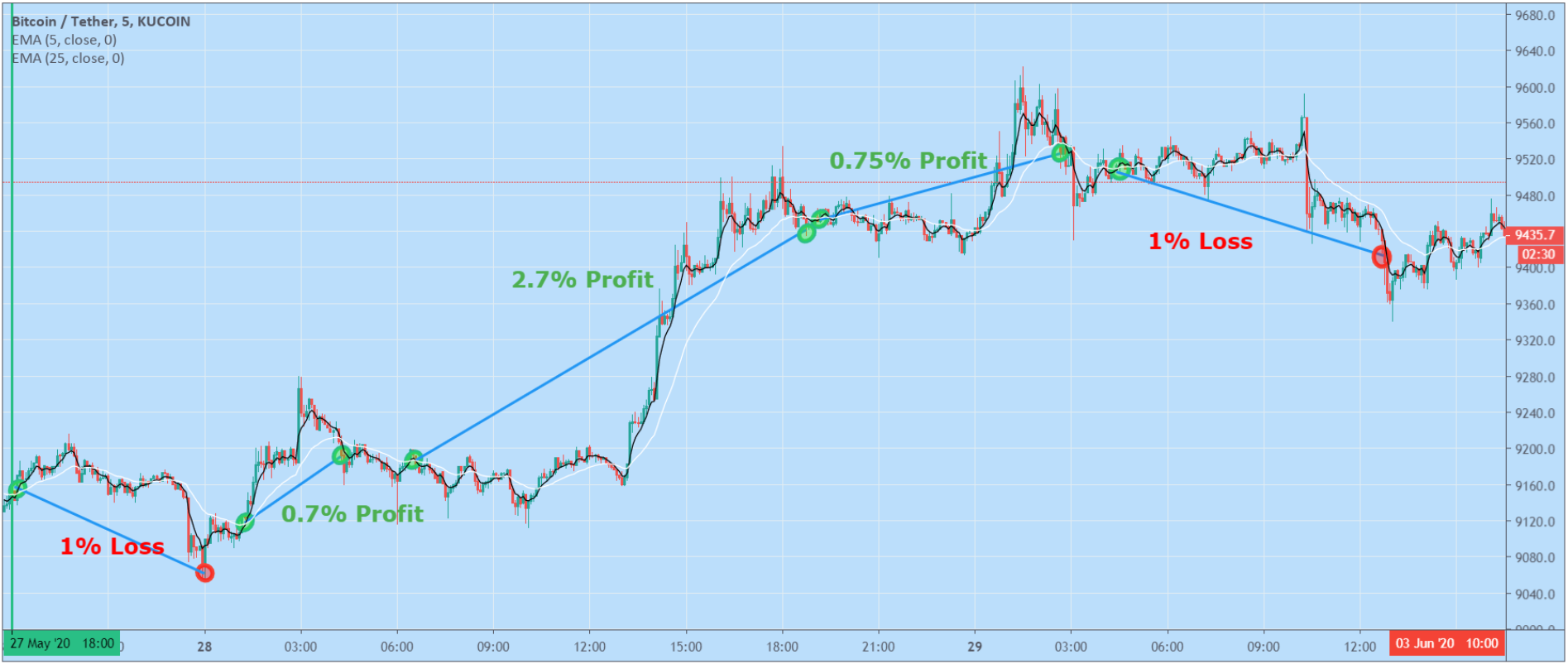
Verwendet den MESA sowohl auf den täglichen als auch auf den 4h-Charts, um die Trendrichtung zu bestätigen, dann eine Überkreuzung der 5- und 25-EMA auf dem 5-Minuten-Chart für Einstiege.
Exit-Einstellungen: Take Profit 7% · Stop-Loss 1% · Trailing Stop-Loss 1% · Arm bei 1,5%
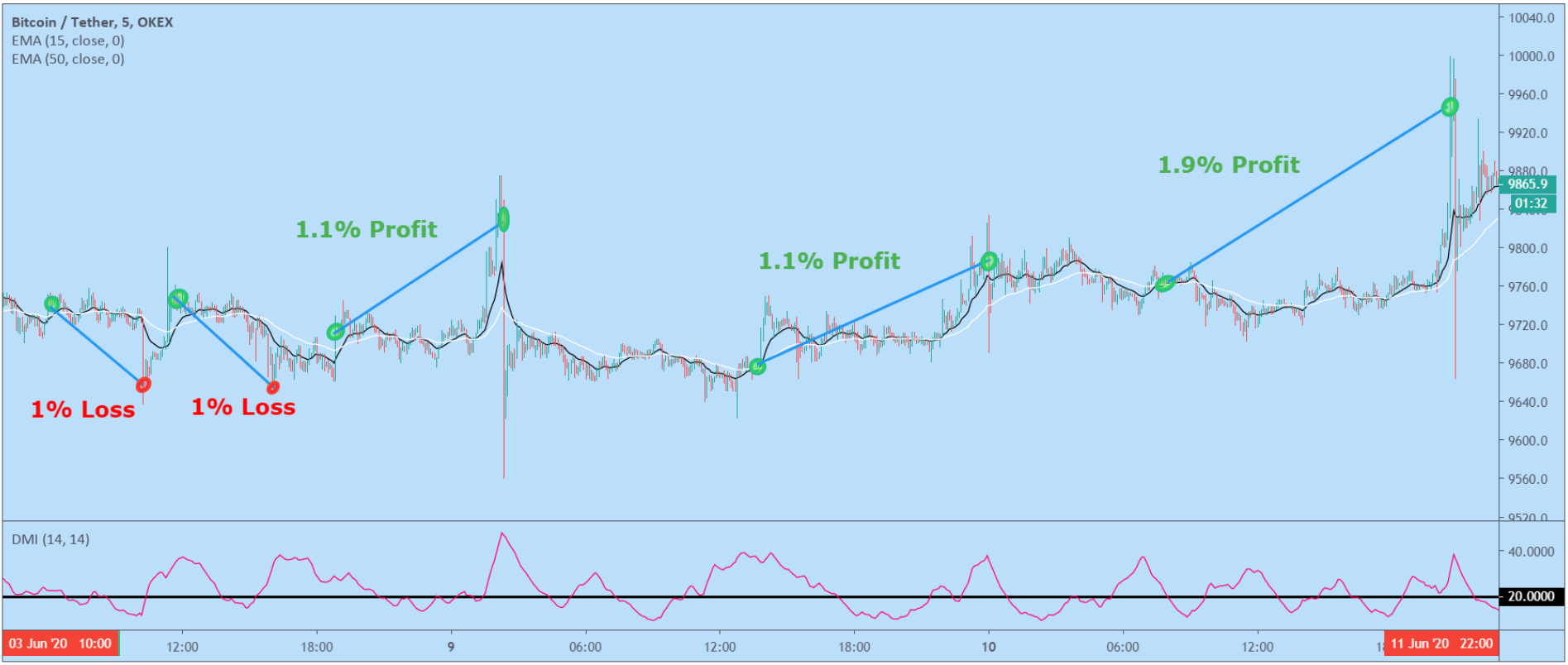
Verwendet den MESA auf dem 4h-Chart für die Trendrichtung und eine Überkreuzung der 15- und 50-EMA kombiniert mit ADX größer als 20 auf dem 5-Minuten-Chart für Einstiege.
Exit-Einstellungen: Take Profit 5% · Stop-Loss 1% · Trailing Stop-Loss 0,5% · Arm bei 1,5%
Trendstrategie
Eine einfache Parabolic SAR-Strategie auf dem täglichen Zeitrahmen, die kontinuierlich Kaufsignale in Aufwärtstrends und Verkaufssignale in Abwärtstrends erzeugt, ohne neutrale Signale zu generieren. Das Hinzufügen des Parabolic SAR auf mehreren Zeitrahmen mit aktiviertem "notwendigem Signal" würde neutrale Signale einführen — deshalb behalten wir es auf einem einzigen täglichen Zeitrahmen.
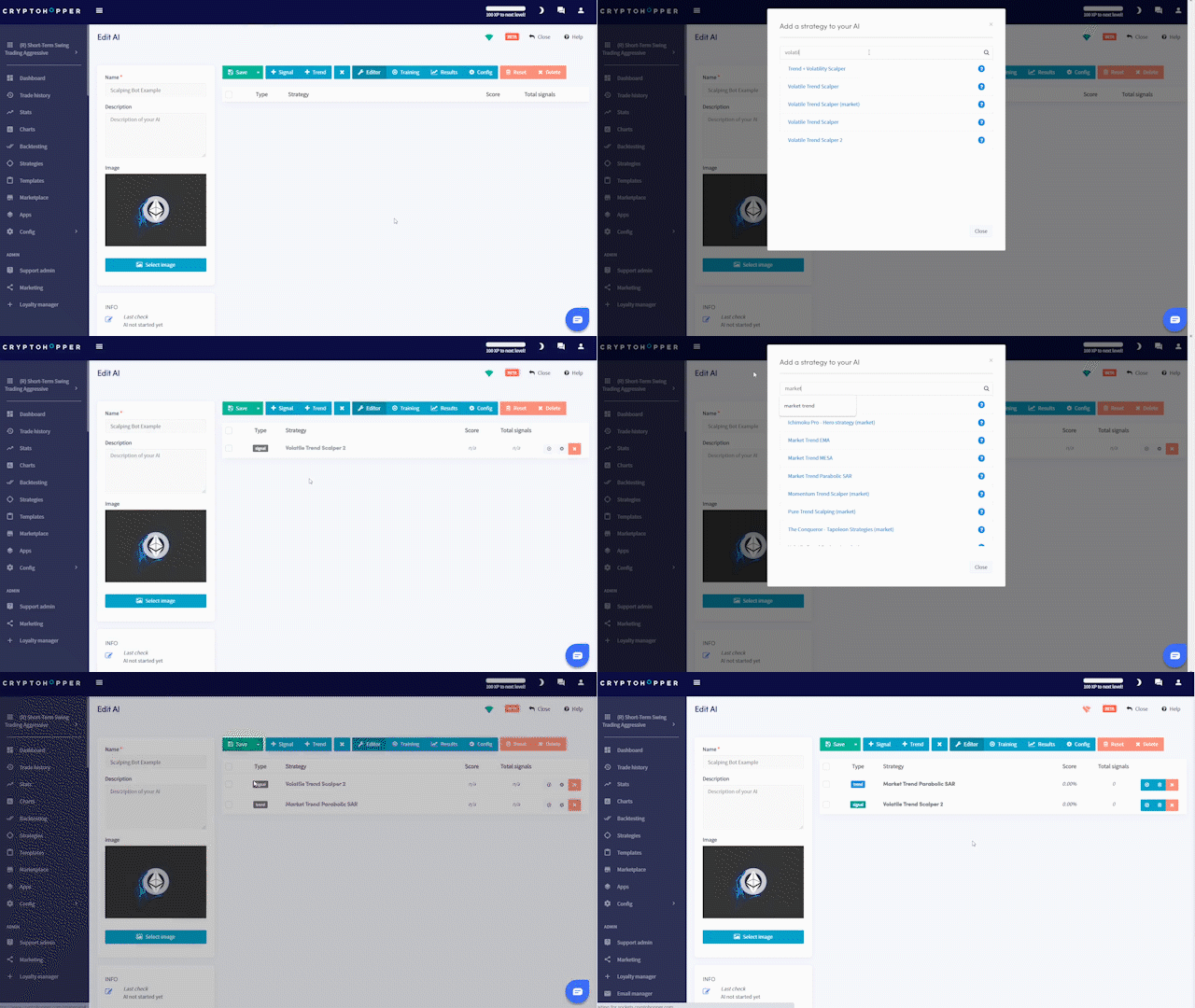
Strategie-Konfiguration
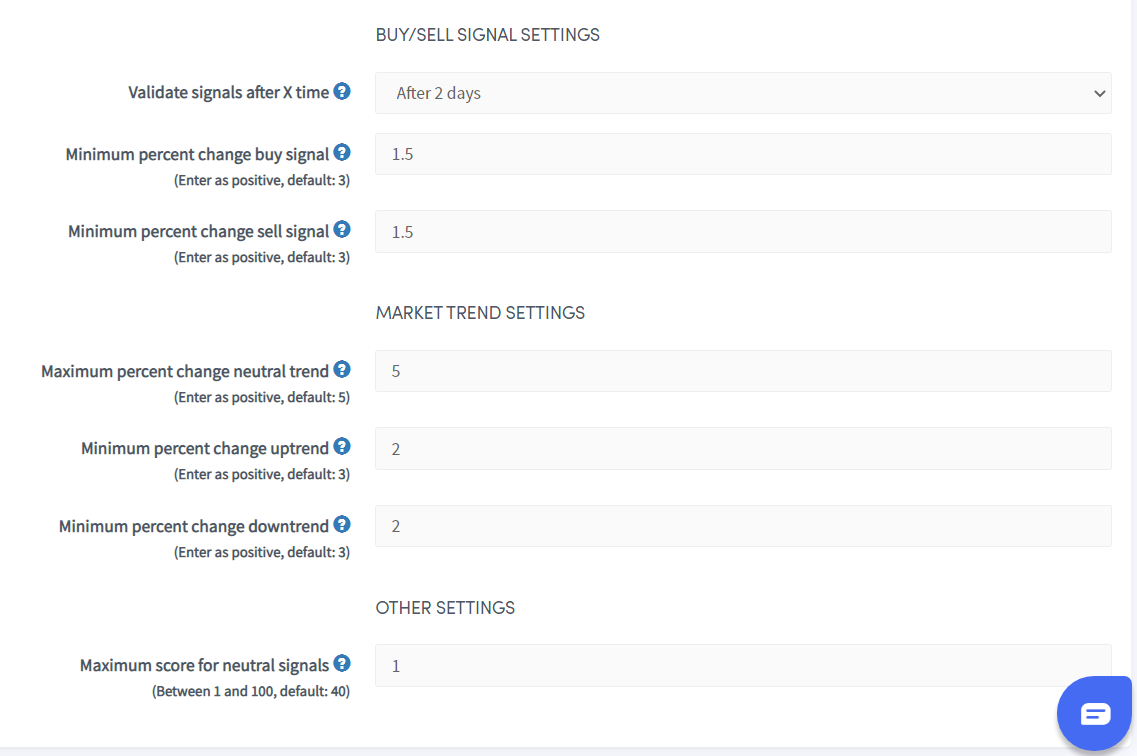
Signale nach X Zeit validieren: 2 Tage — Scalping ist kurzfristig, aber geringe Volatilität kann 1 Tag zu kurz machen, um das Gewinnziel zu erreichen.
Minimale prozentuale Änderung Kaufsignal: 1,5% — die minimale Schwelle für einen positiven Trade, die unserem Trailing Stop-Loss-Arm-Level entspricht.
Minimale prozentuale Änderung Verkaufssignal: 1,5% — hier nicht kritisch, da wir mit Verkaufseinstellungen statt mit Verkaufsindikatoren verkaufen.
Maximale prozentuale Änderung neutraler Trend: 5% (Standard) — nicht wichtig, da unsere Trendstrategie keine neutralen Signale erzeugt.
Minimale prozentuale Änderung Aufwärtstrend: 2% — der Trend sollte eine signifikantere Bewegung erfahren als die Signalstrategie selbst.
Minimale prozentuale Änderung Abwärtstrend: 2% — gleiche Begründung wie oben.
Maximaler Score für neutrale Signale: 1 — nicht wichtig, da wir keine neutralen Signale verwenden.
Training
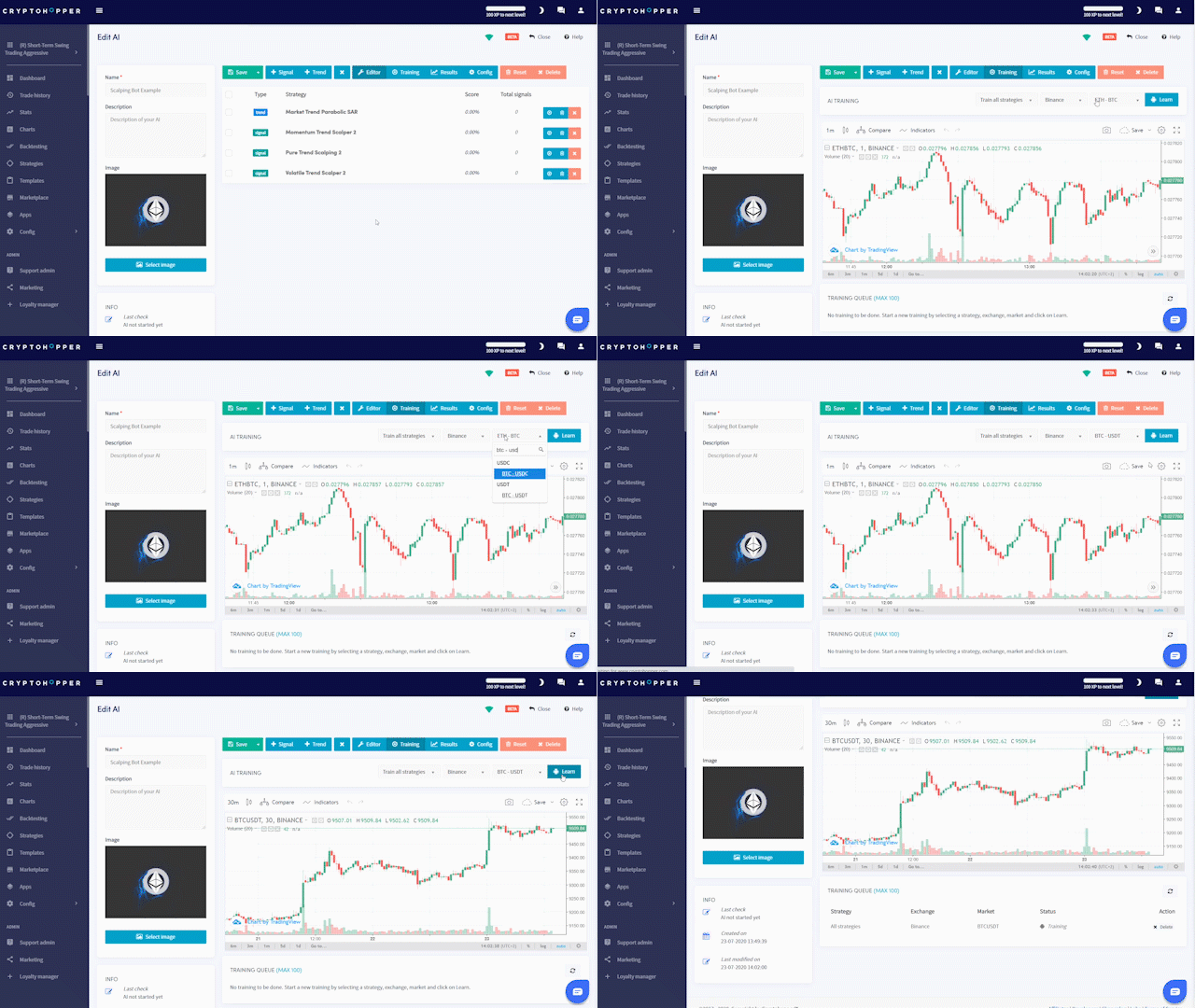
Wir trainieren nur auf BTC/USDT, da unsere Strategien um dieses Paar herum erstellt wurden. Scalping-Strategien generieren genug Signale, um ein genaues Bild der Performance zu geben.
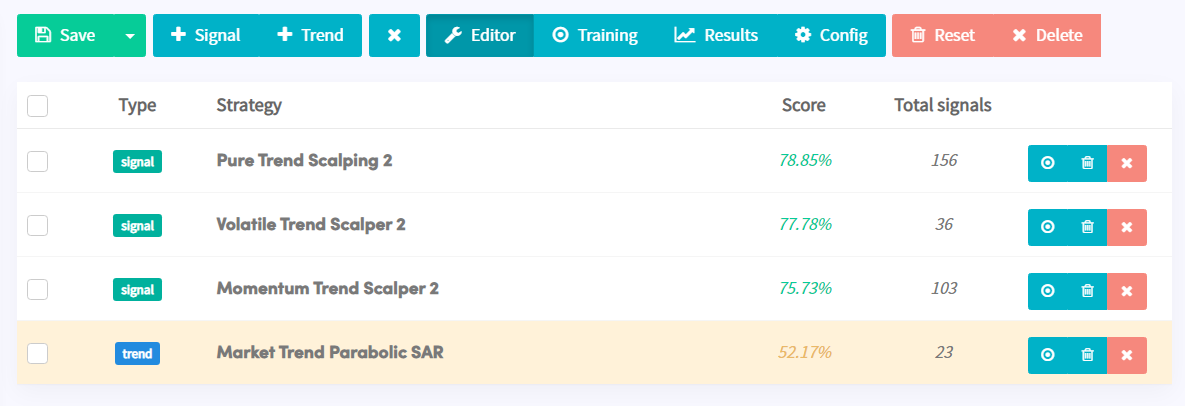
Die Ergebnisse zeigen, dass die Scalping-Strategie gut funktioniert — mehr als 75% der Trades erreichten das 1,5%-Ziel.
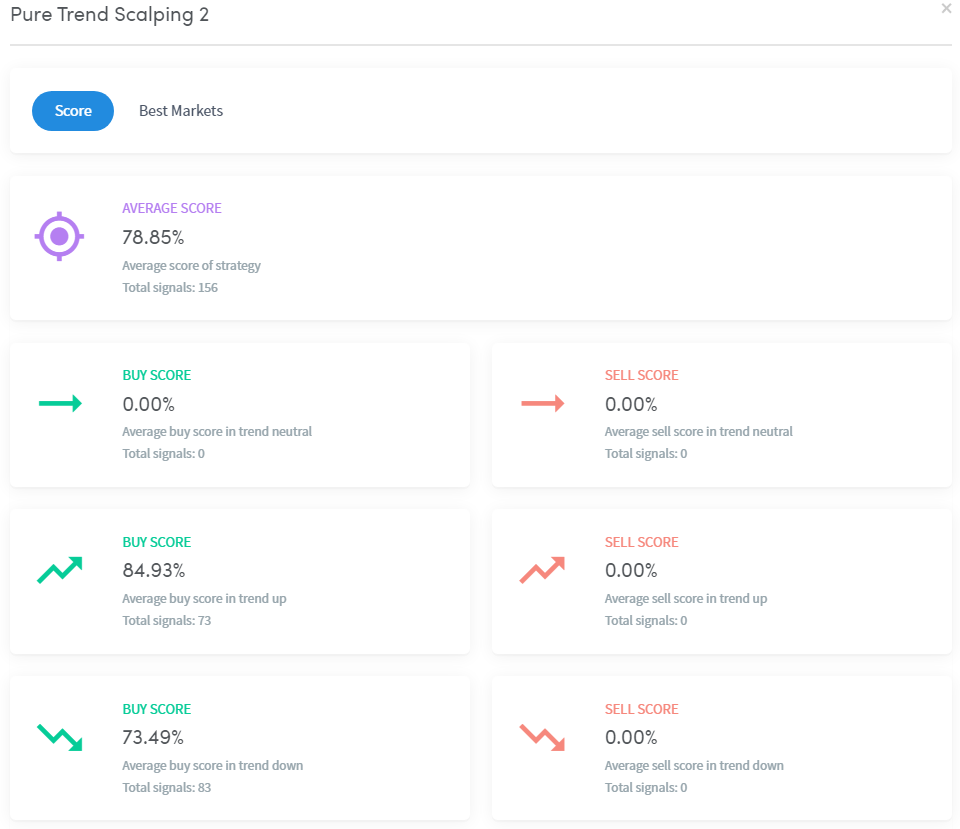
Insgesamt wurden fast 200 Signale generiert. Ein Klick auf einzelne Strategien zeigt, dass die Gewinnraten in Aufwärtstrend-Märkten höher sind als in Abwärtstrend-Märkten — was zu erwarten ist, da der MESA als Trendfilter fungiert.

Im Abschnitt Ergebnisse sind die Aufwärtstrend-Scores etwa 20% höher als die Abwärtstrend-Scores.
Baseconfig
Kauf-Einstellungen
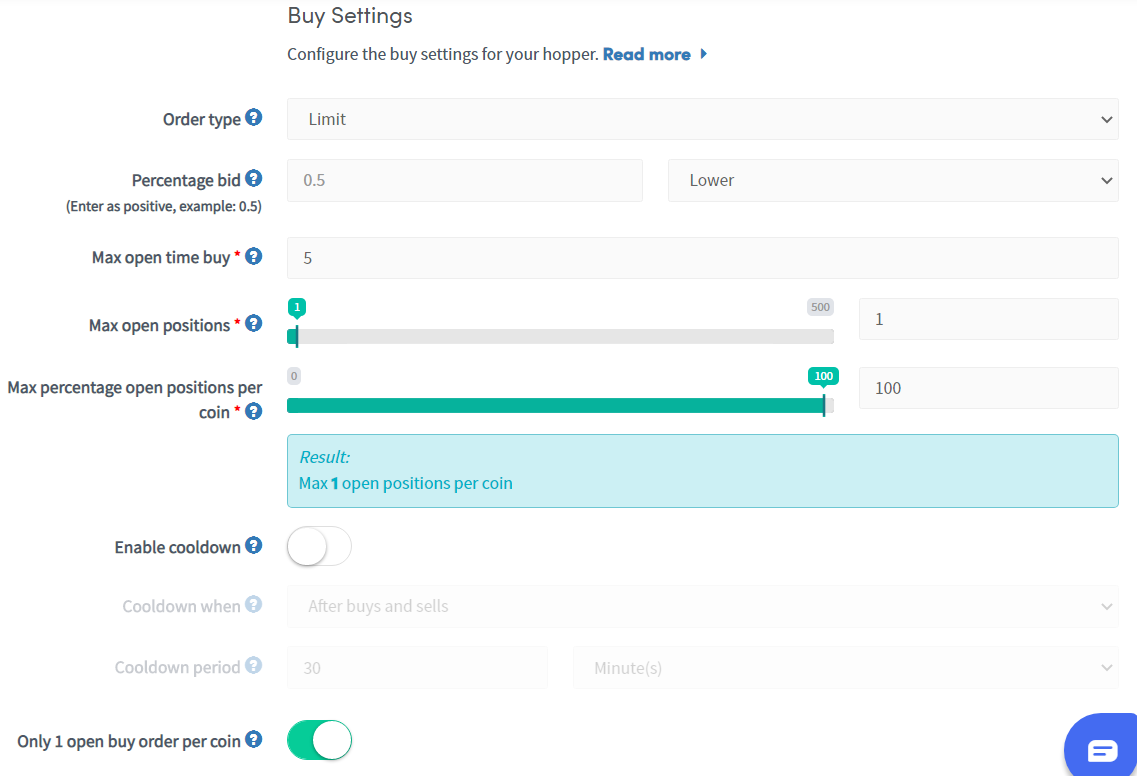
Ordertyp: Limit-Orders — beim Scalping ist selbst ein Unterschied von 0,01% pro Trade signifikant.
Max. offene Kaufzeit: 5 Minuten — wir wollen nicht eine Stunde nach dem Finden der Gelegenheit in einen Trade einsteigen.
Max. offene Positionen: 1 — wir handeln nur eine Währung gegen BTC ohne DCA. "Max. Prozentsatz offener Positionen pro Coin" und "Nur 1 Position pro Währung öffnen" sind entsprechend konfiguriert.
Coins und Beträge
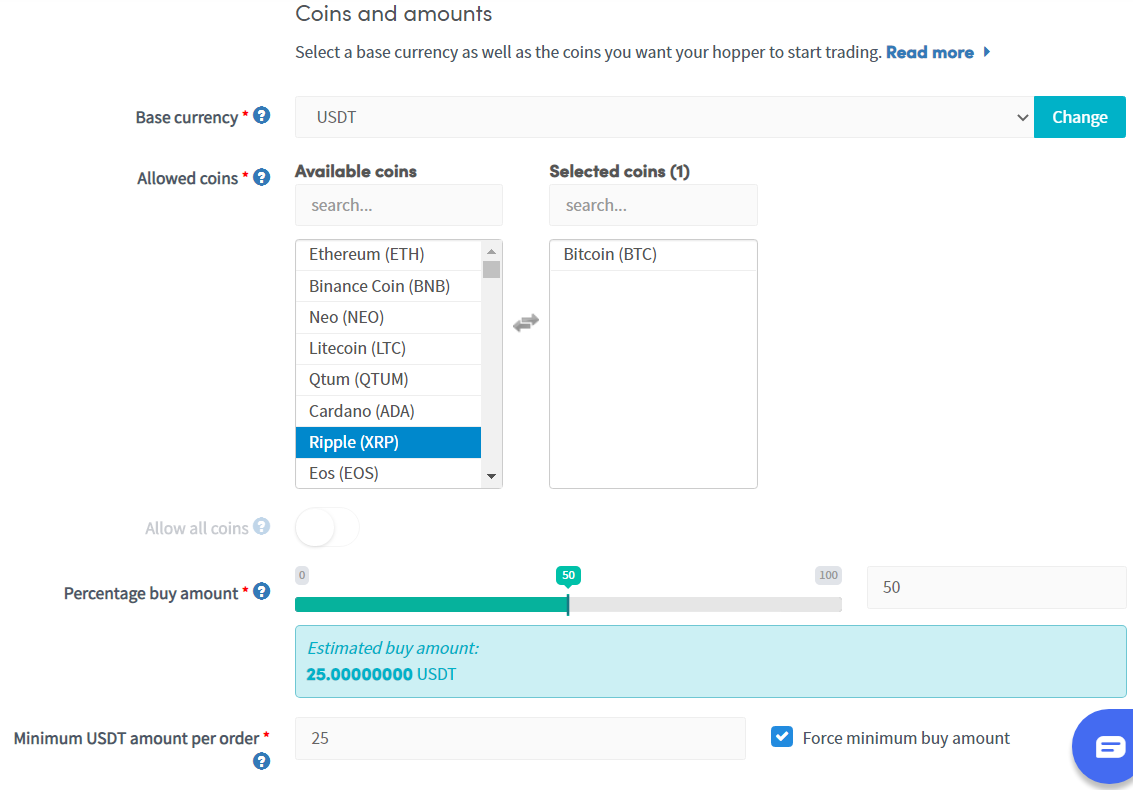
Kurswährung: USDT — unsere KI wurde gegen USDT trainiert.
Prozentualer Kaufbetrag: 50% — da wir nur 1 Position gleichzeitig halten. Wenn du neu im Trading bist, beginne mit einem kleineren Prozentsatz. Wenn du mit allen Mitteln handelst, verwende 98% statt 100%, um Raum für Gebühren zu lassen.
Minimaler USDT-Betrag pro Order: Setze diesen über den von deiner Börse geforderten Mindestbetrag.
Verkauf-Einstellungen
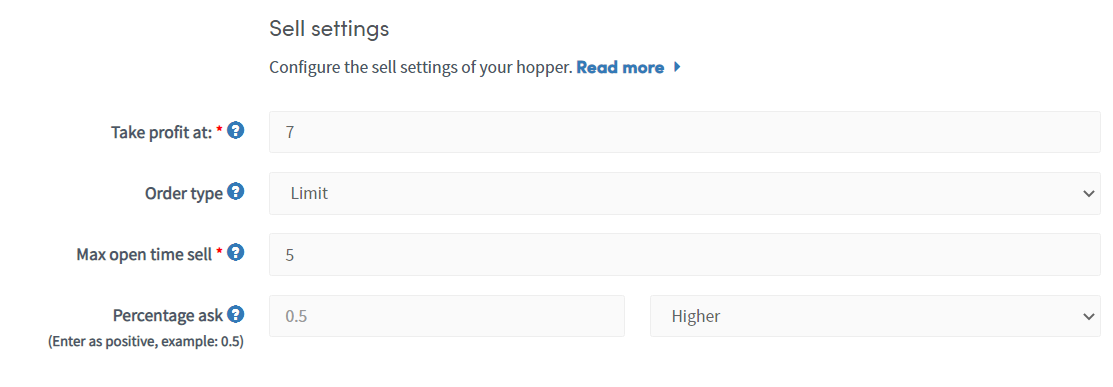
Take Profit: 7% — konsistent mit den Exit-Einstellungen, die in unseren Strategien verwendet werden.
Ordertyp: Limit-Orders — gleiche Begründung wie bei Kauforders.
Max. offene Zeit Verkauf: 5 Minuten — wenn die Order nicht in 5 Minuten ausgeführt werden kann, wird sie storniert und zu einem neuen Kurs erneut versucht.
Stop-Loss
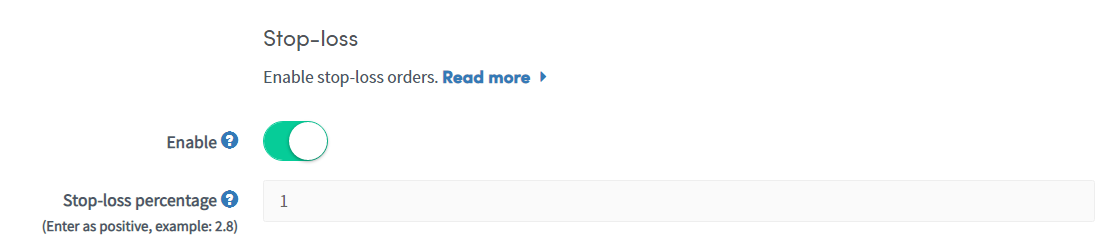
Stop-Loss: 1% — entspricht dem in den Strategien verwendeten Stop-Loss.
Trailing Stop-Loss
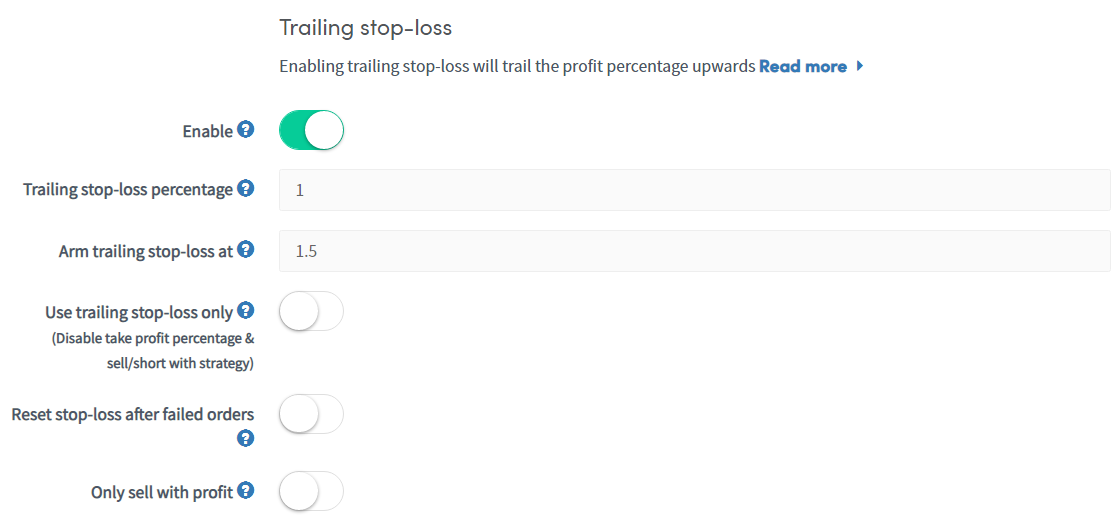
Trailing Stop-Loss-Prozentsatz: 1% — gibt Raum zum Wachsen und sichert gleichzeitig Gewinne, sobald er aktiviert ist.
Arm Trailing Stop-Loss: 1,5% — entspricht der Trainingsschwelle. Stelle sicher, dass deine Börse niedrige genug Gebühren hat, um dies rentabel zu machen.
Strategie-Einstellungen
Strategie: Wähle die KI aus, die du erstellt und trainiert hast.
Nur Signale: Deaktiviert — wir wollen, dass die KI Kaufentscheidungen kontrolliert.
Anzahl der Ziele zum Kauf: 1 — wir halten nur eine Position gleichzeitig.
Korrigierten Score für Käufe/Verkäufe verwenden: Ja — berücksichtigt Echtzeitdaten und ermöglicht es der KI, sich im Laufe der Zeit zu verbessern.
Minimaler Score für Käufe/Verkäufe: Etwa 80% — Selektivität bei Signalen verbessert die Gesamtrentabilität.